
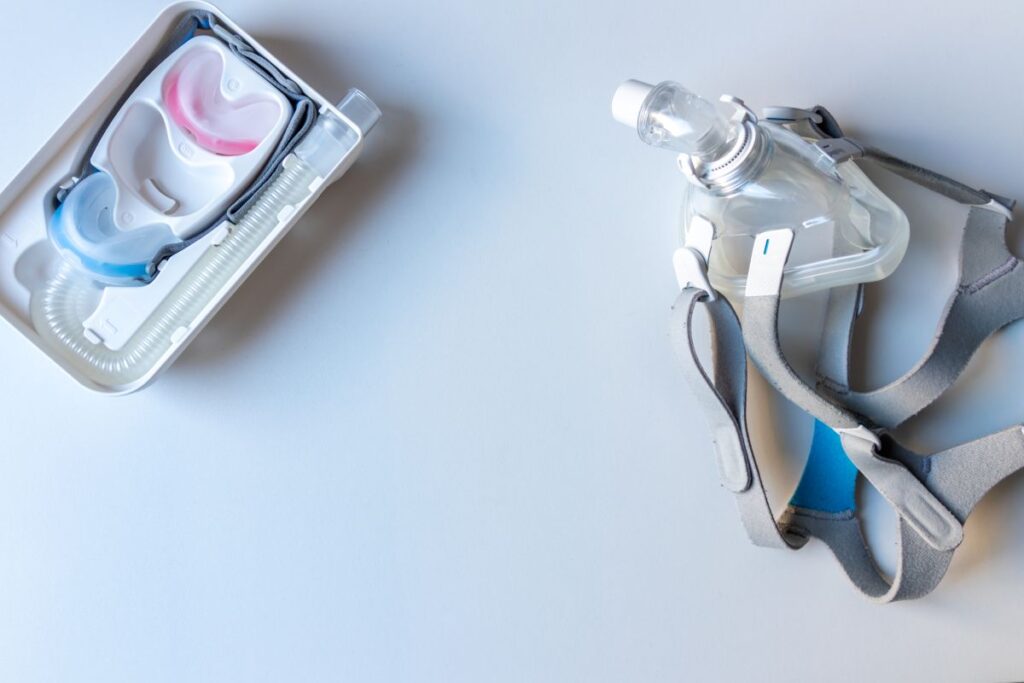
If you struggle to get a good night’s rest due to the frustrating symptoms of sleep apnea, you may be at your wits end trying to figure out how to get the shuteye you deserve. While many people are first prescribed CPAP, these machines may cause uncomfortable side effects like dry mouth and persistent headaches. Conversely, oral appliances may be more comfortable to use but may not work well enough on their own. In these cases, your sleep dentist may prescribe a combination of both therapies. Here’s why, and what you should do if you’re ready to get real results from your sleep apnea treatment!
What is CPAP Therapy?
Short for ‘continuous positive airway pressure,’ CPAP is a sleep apnea treatment that works by delivering forced air through a mask worn over the face while you sleep. This effectively props the airway open, allowing your body to take in proper amounts of oxygen while you rest. Although it can be extremely effective when used as directed, one of the main caveats of CPAP therapy is that it can cause uncomfortable side effects like persistent headaches and dry mouth due to the constant delivery of pressurized air. As a result, many patients simply don’t use their machine as often as they should, or sometimes even at all.
What is Oral Appliance Therapy?
Oral appliance therapy uses a comfortable, customized device only available from your dentist to prop the airway open manually. This allows the wearer to breathe without the need for forced air, but in many cases, it is simply not effective enough on its own to help them get the results they need.
How Does Combining CPAP and Oral Appliance Therapy Work?
Combination therapy still uses the forced air of CPAP to prop the airway open, only instead of relying on higher settings to achieve results, users can turn down the dial and receive a more comfortable stream of air because their oral appliance is doing part of the job. This means that things like chronic headaches and dry mouth are less common and less severe, making it more likely that both therapies will be used as directed so you can get the comfortable, complete sleep you deserve.
Do I Need Combination Therapy?
The best way to determine if you qualify for combination therapy is to visit your sleep dentist for an evaluation. There, they’ll review your health and sleep patterns and discuss with you what works (and what doesn’t) about your current sleep apnea treatment. If you are struggling to get satisfactory results from either therapy, a combination of both may be the solution.
Remember, when CPAP or oral appliance therapy doesn’t go far enough, don’t give up. With a combination of both treatments, you could finally get the complete, restful sleep you deserve!
About Dr. Drummond
Dr. David J. Drummond earned his undergraduate degree at the University of Florida and his dental degree at Northwestern University Dental School. Following college, he joined the United States Army Dental Corps, where he received intensive training in oral surgery, endodontics, pediatric dentistry, and prosthodontics. Today, he is proud to call Lawton home, and to help patients get the comfortable, long-lasting sleep they deserve. If you’re frustrated with tossing and turning but aren’t getting adequate results from your current treatment, schedule a consultation to learn more about combination therapy by visiting our website or calling 580-355-0344.