
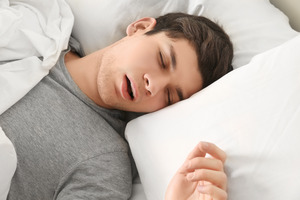
If your breathing repeatedly stops and restarts while you’re asleep, you have what’s known as sleep apnea. There are several factors that can contribute to this all-too-common sleep disorder, but one that may not be obvious on the surface is the way your jaw sits. Just how can the position of your jaw affect your breathing while you’re asleep? And what can you do to resolve the issue?
Jaw Position and Sleep Apnea
Most of the time, sleep apnea is the result of a blocked airway. When the tissues in the throat become too relaxed, they can collapse and obstruct the flow of air. This results in breathing interruptions that can occur as often as 30 times in a single hour.
What does this have to do with jaw position? In some cases, your jaw may shift backward while you’re asleep. This can significantly narrow the airway and make breathing interruptions more likely to occur.
Why Is It Important to Treat Sleep Apnea as Quickly as Possible?
If you’re suffering from sleep apnea due to the position of your jaw, you shouldn’t ignore the issue for too long. When you experience a sleep apnea episode, your brain pulls the body out of the sleep cycle so that breathing can resume. This can make it very difficult to get quality rest, leaving you feeling extremely tired during the day. On top of that, sleep apnea can increase your risk for heart attacks and other dangerous cardiovascular issues. In short, it’s in your best interest to have the disorder treated as soon as you can.
How Can Sleep Apnea Be Treated?
To have sleep apnea properly diagnosed, you’ll need to undergo a sleep test. Once it’s confirmed that you have the disorder, you can start exploring your treatment options.
In cases where nighttime breathing issues are related to jaw position, you might benefit from wearing an oral appliance when you go to bed. This device can move your jaw slightly forward while you’re asleep, thereby widening the airway and improving your nighttime breathing. Note that there are various kinds of oral appliances available; the type that your dentist recommends will largely depend on the specifics of your situation.
In short, if your breathing is being interrupted at night, the position of your jaw may be partially to blame. It’s essential to act quickly to have the source of your sleep apnea properly identified and addressed; the sooner you have the disorder treated, the sooner you can enjoy a better night’s sleep.
About the Author
Dr. David J. Drummond graduated from Northwestern University Dental School in Chicago in 1982, and he has received advanced training in various aspects of dentistry. At his practice in Lawton, he focuses on providing personalized solutions for sleep apnea, including comfortable, high-quality oral appliances. If you are looking for a way to get sleep apnea under control, you can schedule an appointment with Dr. Drummond by visiting his website or calling (580) 355-0344.